When Cleaning Is Worth Investigating
Repeated filter problems, water found during servicing or evidence of settled contamination can justify a closer look at an oil tank. A clean may also be considered before a fuel change, after a long period out of use or during other storage work. Boiler faults alone do not prove the tank is the source.
Explain what has happened and share any findings from your heating engineer. The first decision is whether the issue concerns the fuel, the vessel, the pipework or a combination. Cleaning a damaged tank does not restore its structural condition, so replacement may need consideration instead.
Tank Cleaning And Fuel Treatment Differ
Tank cleaning targets contamination inside the vessel, including settled water and sludge where present. Fuel filtration or polishing treats the liquid and may be useful in a suitable system, but it does not automatically remove deposits attached to the tank surfaces. The quotation needs to identify the problem and proposed method.
The condition of the stored product determines what can be retained. Suitable fuel may be held separately while the vessel is cleaned, then returned as agreed. Heavily contaminated or unsuitable fuel can need removal rather than reuse, which changes both the waste volume and the cost of restoring the supply.
Assess Openings And The Tank Condition
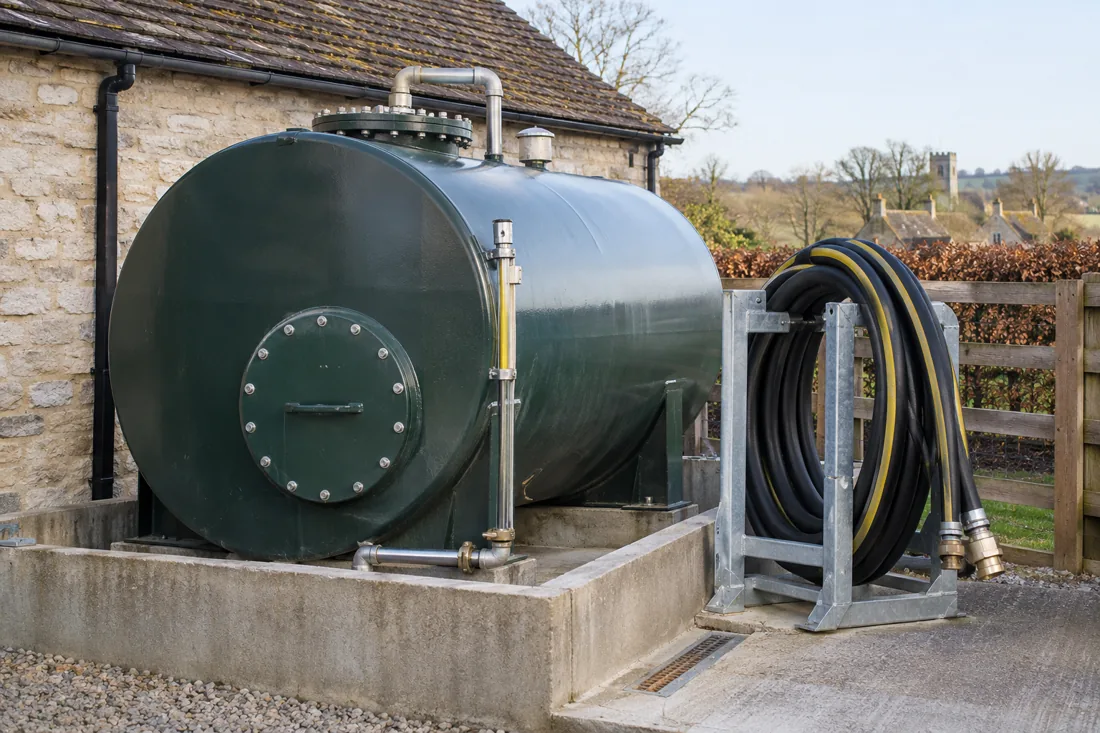
Photographs of the whole tank, its accessible openings and surrounding space help establish a realistic method. Do not open the tank or remove fittings to obtain pictures. The assessor needs the material, capacity, product stored and any existing signs of distortion, rust or loss of containment.
Restricted openings and internal divisions can limit which surfaces equipment can reach. Domestic plastic tanks and large commercial steel vessels do not call for identical cleaning methods. Where a tank is buried or inside a plant room, mention that at the start so access and ventilation can be considered.
The Cleaning Sequence
The connected system is made safe before fuel recovery begins. The agreed work can include removing suitable fuel to temporary storage, extracting contaminated liquid and residue, and cleaning accessible internal surfaces using a method selected for the tank. Waste and reusable product must remain clearly separated.
After the clean, the condition of the vessel and relevant connections can be reviewed before return to service. Recovered fuel is returned only if suitable and included in the agreed scope. The heating or other connected equipment then needs the appropriate restart checks, with any unresolved issue recorded rather than hidden by the clean.
Access, Downtime And Entry Risks
Plan for the heating or fuel supply to be unavailable during the work. Tell us if the building cannot tolerate a long interruption, or if a generator tank supports essential equipment. A temporary supply, where feasible, needs its own arrangement and should not be assumed within a standard cleaning price.
Equipment and hoses need a safe route from the vehicle to the tank. Internal tank entry is specialist confined-space work and should be avoided when a suitable external method is available. Any required entry needs the assessment and safeguards described by HSE confined-space guidance.
What Changes The Cleaning Price
The amount of reusable fuel, contamination volume, tank size, openings and internal layout all influence the work. Difficult vehicle standing, long hose routes and commercial permit requirements can add preparation. Fuel that cannot be reused creates a separate disposal and replacement-fuel consideration.
Ask whether the quote includes sampling or other investigation, temporary storage, filter work and restart checks. A clean should have a defined objective and a record of what was actually achieved. If a change of product is planned, compatibility of the tank and connected equipment needs checking beyond the cleaning itself.
Records And Reducing A Repeat Problem
Keep the work report, any sampling results and the appropriate waste documentation for the materials removed. The paperwork should distinguish cleaning from an integrity assessment or installation certificate. Commercial maintenance teams should record any areas that could not be accessed and any follow-up inspection that was recommended.
A useful enquiry includes the postcode, tank capacity and material, approximate fuel level and the reason cleaning is being considered. Add photographs of access and any existing service report. After the work, follow the tank manufacturer's maintenance advice and arrange investigation of water entry or other identified causes so the same problem is less likely to return.
Questions Before You Book
Can Cleaning Fix A Cracked Oil Tank?
Oil tank cleaning cannot fix a cracked vessel. Cleaning addresses contamination and deposits, while a crack is a containment problem that needs its own assessment. Avoid adding fuel to a suspect tank and explain any smell, wet ground or visible damage when enquiring so the appropriate next step can be considered.
Will All My Fuel Need To Be Disposed Of?
Fuel disposal after oil tank cleaning depends on its condition and the work required. Suitable fuel may be recovered and returned, while contaminated liquid and residue need an appropriate waste route. Ask how reusable fuel will be kept separate and whether replacement fuel is outside the cleaning quotation before booking the work.
Describe The Work You Have In Mind
A postcode, tank details and an honest picture of the access make a useful starting point. If photographs are needed, the responding provider can agree how to receive them.
Request A Quote