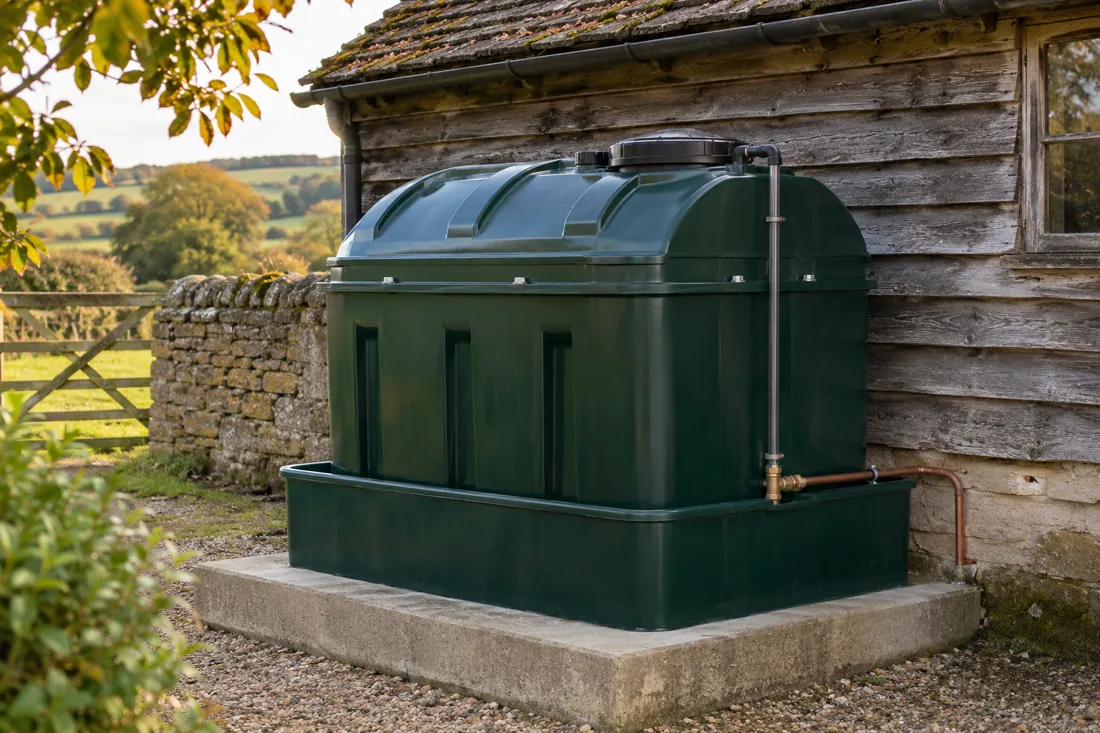
Replace The Tank, Review The Installation
Cracking, distortion, corrosion and unstable supports are reasons to arrange an assessment rather than wait for the next delivery. A change in household use or commercial heating demand can also make an existing tank unsuitable. Age is useful background information, but condition and installation details matter when deciding what should happen next.
Replacement gives you a chance to review the position, base and fuel line together. A tank of similar capacity can have a different footprint or support requirement. Reusing the old location should be a considered decision, not an assumption based on where the first tank happened to fit.
Choose Capacity And Shape Together
Tell us about oil use, delivery frequency and the appliances supplied. Horizontal, vertical and slimline designs offer different ways to use the space, but a compact outline does not remove the need for safe siting, support and maintenance access. Compare usable capacity as well as the external dimensions.
A bunded tank has an outer containment layer around the fuel vessel. The choice of containment should follow the property assessment, applicable requirements and insurer conditions. For a farm, distinguish farmhouse heating from agricultural fuel and other business uses before choosing the storage arrangement.
The Position And Base Come First
A level, stable base must support the selected tank in accordance with its installation requirements. Broken slabs, subsidence or undersized supports may need replacing even where they carried the old tank for years. Ask whether base preparation and any curing time are included in the programme.
Check the position against buildings, boundaries, openings, drains and water features. Stone walls can restrict access without automatically providing suitable fire protection. New and replacement home installations in England must meet Building Regulations, as explained in GOV.UK domestic oil storage guidance.
Plan For The Oil Already Paid For
The remaining fuel affects pumping time, temporary storage and the sequence of the changeover. Suitable oil may be recovered for reuse after its condition is checked. Water and sludge should not simply follow that oil into a new tank, where they could carry the original problem forward.
Give an approximate level and your last delivery date if known. Do not run an apparently damaged tank down deliberately or order another delivery to test it. Ask how unusable fuel will be managed and whether recovery equipment can reach the tank from a safe standing position.
Heating Interruption And Access
The heating supply needs to be made safe for the changeover, then checked when the system returns to service. The length of the interruption depends on the job. A new position, base construction or substantial pipework changes can create a longer programme than a straightforward exchange.
Discuss a temporary supply arrangement if continuous heating is important, subject to suitability and separate cost. Someone should be available to provide agreed access to the appliances and controls. Photograph garden gates, steps and parking restrictions, particularly where delivery of the new tank uses a different route from removal of the old one.
Read The Quotation As A Whole Job
A useful replacement quotation describes the new tank, base works, old tank removal, fuel handling and connection work. It should say which existing components are being reused and which are being renewed. Confirm whether the price includes clearing redundant supports and leaving the access route tidy.
The main cost variables are capacity, material, containment, access, base condition and the extent of pipework. Relocation adds further ground and connection work. If budget is tight, ask which elements are essential to the proposed installation and which finish or capacity options can reasonably change.
Handover And Future Checks
Ask the installer to explain the Building Regulations compliance route before booking. A suitably registered competent person can self-certify relevant work, while other routes involve building control. Keep the applicable completion documents alongside the tank warranty, product details, commissioning information and waste records for the old equipment.
At handover, identify the fill point, gauge and any routine checks recommended for that model. Keep access clear for inspection and future deliveries. If the existing tank is actively losing oil, read our leaking oil tank guidance first because containing pollution takes priority over arranging an ordinary replacement.
Questions Before You Book
Can My Old Oil Go Into The Replacement?
Existing oil may go into a replacement tank if assessment shows it is suitable for reuse. The fuel has to be recovered and handled without transferring settled contamination into the new vessel. Tell us how much remains, whether there have been water or sludge problems and when the last delivery took place.
Can The Replacement Stay In The Same Position?
A replacement tank can stay in the same position only if that location suits the new installation. The assessment needs to cover the base, nearby buildings, boundaries, delivery arrangements and pollution risks. A past installation does not establish that the same position is suitable for a different tank or changed surroundings.
Describe The Work You Have In Mind
A postcode, tank details and an honest picture of the access make a useful starting point. If photographs are needed, the responding provider can agree how to receive them.
Request A Quote