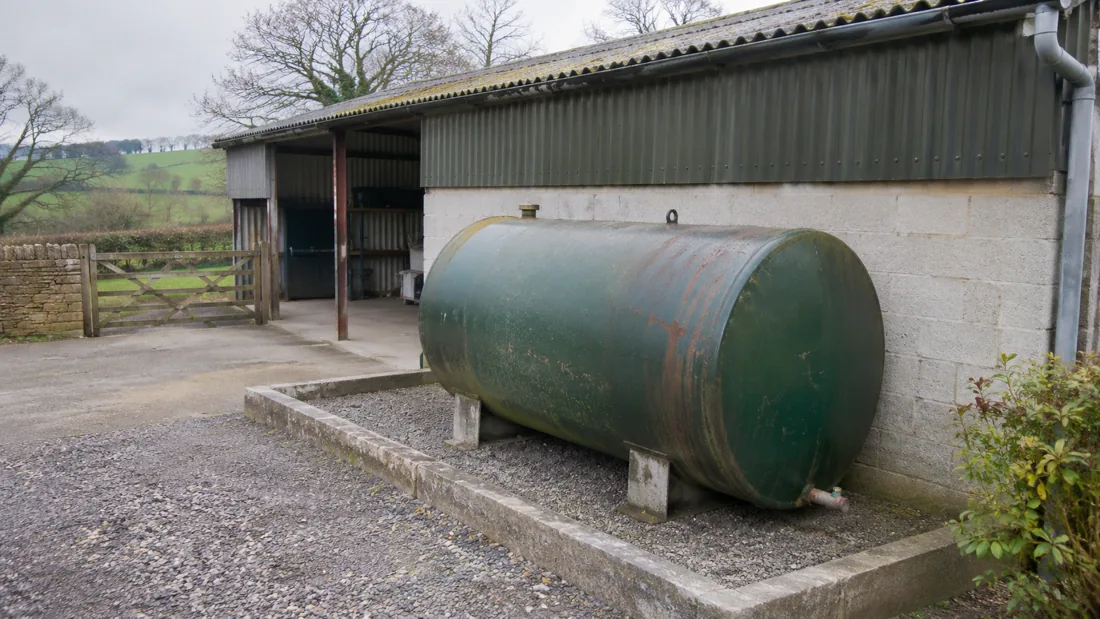
When Removal Is The Right Choice
A redundant heating oil tank often becomes an obstacle when a home changes heating system, a garden is redesigned or a property is prepared for sale. At a commercial premises, removal may follow a boiler upgrade, closure or change in fuel demand. Start by establishing whether the tank still supplies anything, including an oil-fired cooker or a second building.
If you still need oil heating, compare a coordinated tank replacement with removal alone. If the tank is buried, use our underground tank guide because excavation and environmental assessment change the scope.
What An Empty Tank Still Contains
A low gauge reading does not mean a tank is ready to move. Fuel can remain below the outlet alongside settled water and sludge, while residues can create hazards during handling or cutting. The removal method needs to account for the previous contents and the condition of the tank.
Tell us roughly how much fuel remains and whether it could be used elsewhere. Recovery into suitable storage may be possible after assessment, but unusable fuel and contaminated residues need a separate waste route. Do not decant fuel into household containers or try to make the tank safe yourself.
Planning The Route Out
In a stone-built village garden, the narrowest gate may matter more than the distance from the road. Photograph the whole route, including steps, changes in level, retaining walls and any covered passage. A tank that was installed before an extension was built may no longer fit through its original access.
The assessment considers whether the tank can leave intact or needs controlled dismantling after preparation. Larger steel tanks may require lifting equipment, suitable vehicle standing and a lift plan. Mention shared drives, overhead lines, fragile paving and any restrictions on using neighbouring land.
From Isolation To A Clear Site
The proposed sequence should identify the connected equipment, make the system safe, recover the liquids and prepare the tank for handling. Cleaning and any atmospheric assessment must match the planned work. Cutting is a specialist operation, not a shortcut that can begin simply because the tank appears empty.
After removal, the base and nearby ground can be inspected more clearly. Agree whether redundant pipework, supports and the concrete base are included in the price. A cleared tank position is different from a fully reinstated garden, particularly where foundations or contaminated ground need further work.
Cost Drivers Worth Separating
Tank size and material influence the equipment and labour required, but access can change the price just as much. Fuel recovery volume, residue disposal, lifting arrangements, dismantling and the distance to suitable vehicle standing all matter. An inaccessible plant-room tank needs a different approach from a plastic tank beside an open driveway.
Ask for the quotation to distinguish the removal itself from base demolition, pipework work and reinstatement. If staining or a historic spill is suspected, agree how investigation will be priced. Unexpected contamination should trigger a discussion about additional scope rather than an assumption that ordinary tank removal includes remediation.
Domestic And Commercial Records
Keep a description of the tank removed, the date and the work completed. Ask which waste records will be supplied for the actual materials taken away, and check the waste carrier and destination arrangements. Waste classification determines the appropriate transfer or consignment documentation, rather than every item receiving the same form.
For a commercial site, request the relevant risk assessment, method statement and any lifting arrangements before work. Testing records or specialist certificates depend on the method used. Removing a tank does not itself certify that the surrounding land is free from contamination.
What To Send With Your Enquiry
Include your postcode, the tank material and approximate capacity if known, and whether it is above or below ground. Add photographs of the tank from a safe distance, its connections, base and access route. Explain why it is being removed and whether the connected heating must remain available.
Flag oil smells, wet patches, unreliable gauge readings and any previous spill. If you are organising a property sale or building project, give the relevant date and who will coordinate access. We can use those details to help define the next assessment and a quotation with a useful, explicit scope.
Questions Before You Book
Can A Tank Be Removed Through A Narrow Gate?
A narrow gate does not automatically rule out tank removal. The assessor needs to compare the tank dimensions with the full route and decide whether controlled dismantling is suitable. Include steps, overhead obstructions and the available vehicle position in your enquiry so the method and any additional handling can be assessed.
Does Removal Include The Concrete Base?
Oil tank removal includes the concrete base only when that work is agreed in the quotation. Some owners keep a sound base for another use, while others want it broken out and the ground reinstated. State the finish you want and ask how any staining or unsuitable ground discovered underneath will be handled.
Describe The Work You Have In Mind
A postcode, tank details and an honest picture of the access make a useful starting point. If photographs are needed, the responding provider can agree how to receive them.
Request A Quote